It can be hard to stay emotionally ‘up’ in the war against fossil fuels… because fossil fuels are still winning. But there’s nothing like seeing an actual climate tech deployment to change my brain chemistry and make me happy.
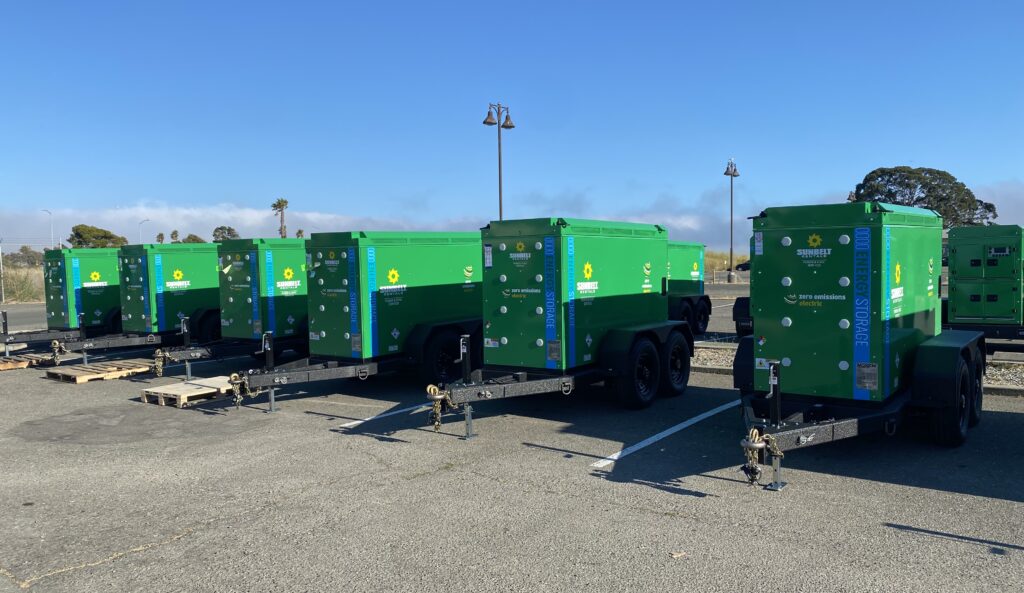
This happened yesterday – my wife and I were biking on the waterfront in an old industrial area of Richmond, CA. We took a shortcut and passed what looked like dozens of diesel generators parked in rows. Fucking diesel, I thought to myself.
But my wife noticed something. And said, “wait, aren’t those batteries?”
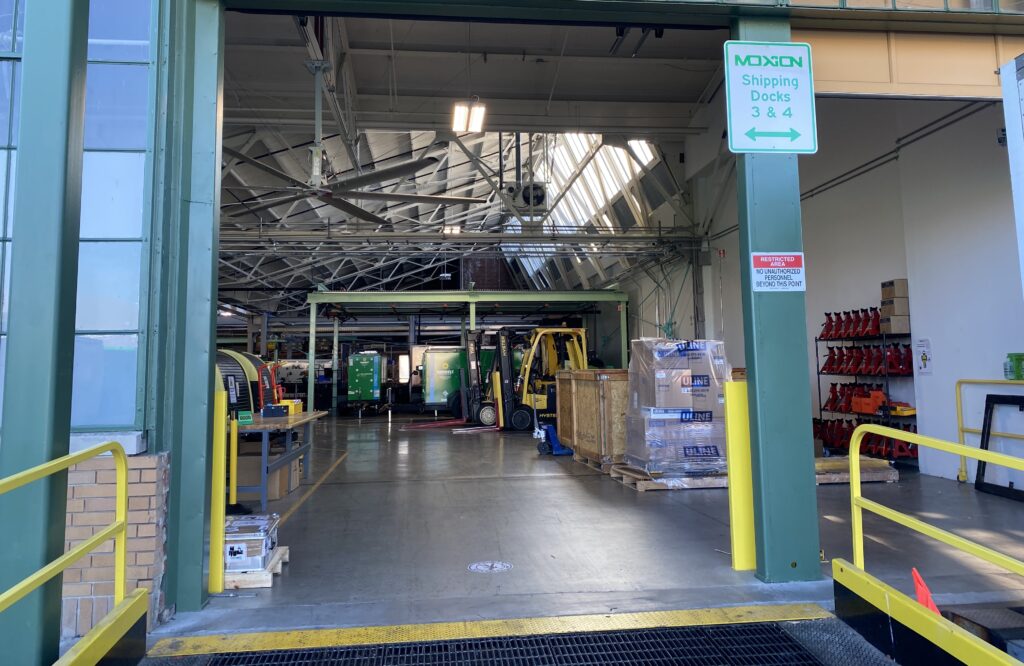
We got closer and realized we were looking at a few dozen brand new battery-electric generators waiting to be shipped out from Moxion Power’s local manufacturing facility.

I’d heard of Moxion, which was featured in a recent Canary Media piece on how batteries are finally breaking through in the generator market. After a decade of uphill battles, the economics and benefits of battery generators are starting to win over diesel in market segments like movie sets, construction, and disaster relief.
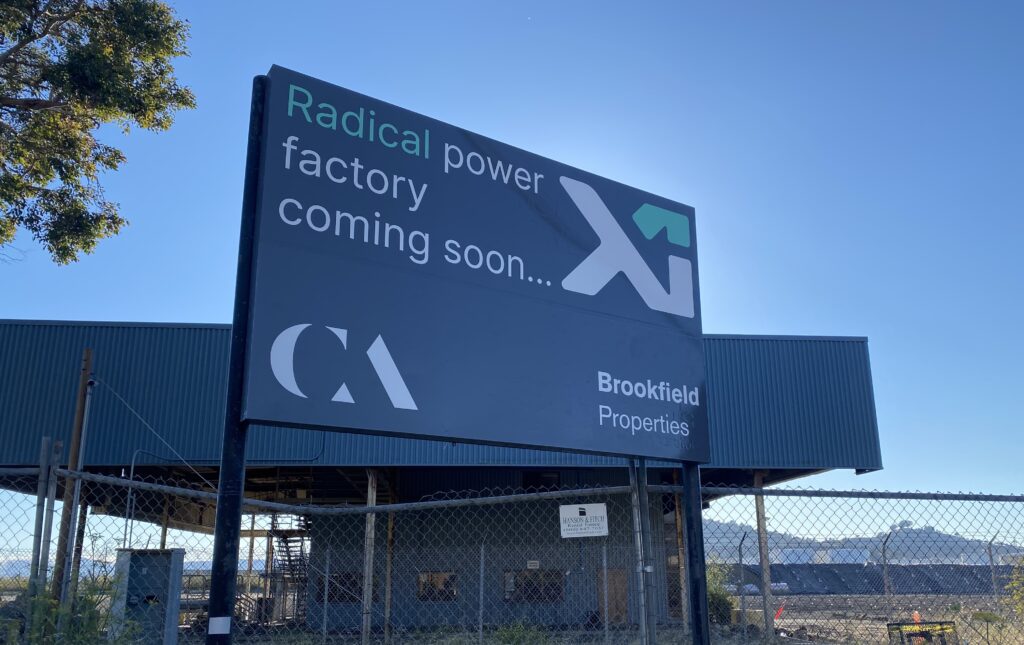
Having just raised $100M, Moxion Power is expanding its Richmond manufacturing capability, with the goal of building 10,000 generators per year locally. And they’re doing it in a perfect place: the historic site of Kaiser Shipyards, which built more ships during World War Two than any other shipyard in the U.S. (sometimes as many as three per day).
Hopefully Moxion’s Richmond plant will be as meaningful in the war against diesel as Kaiser’s shipyard was in World War Two. It’s a great place to do this kind of manufacturing, because the area is already thoroughly contaminated by decades of toxic waste from the shipyards and other industrial uses, and thus not suitable for housing.
Anyway… seeing this green army yesterday got me pumped up!
Here’s some more pics:
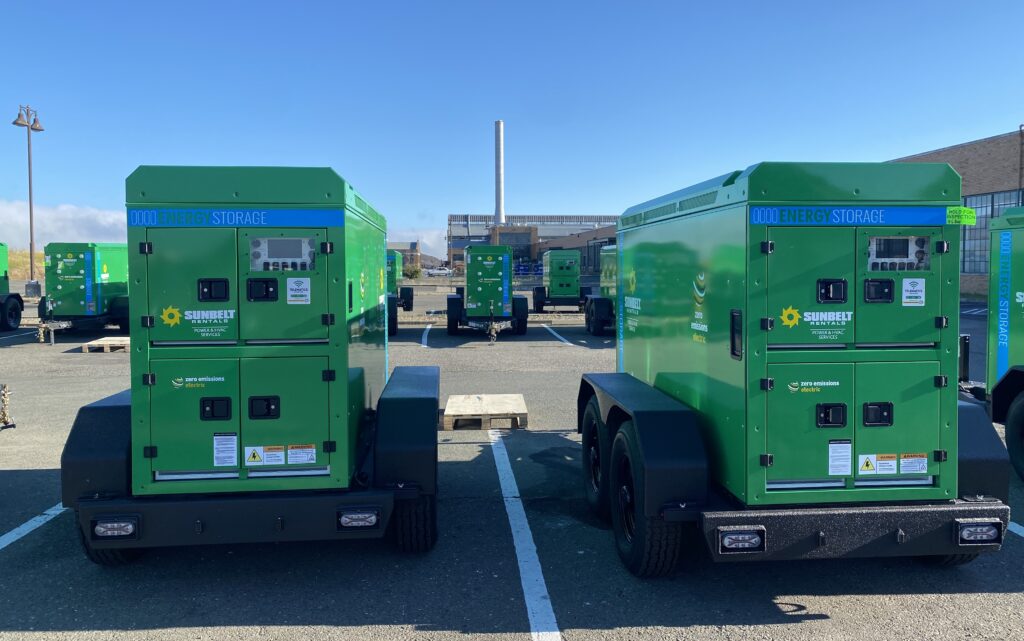
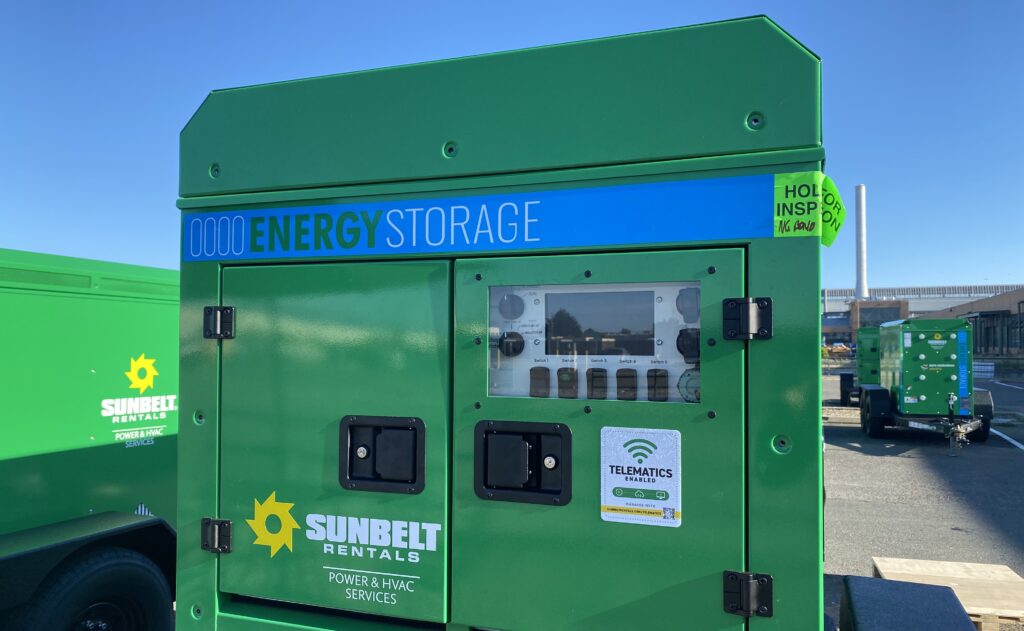
These units all carry Sunbelt Rentals branding. Sunbelt did a deal with Moxion Power early this year for over 600 of these units, to help its customers decarbonize construction sites (they also invested in Moxion). Portable diesel generators are a multi-billion dollar business in the U.S., much of which is rentals. And rental are a great way for users to try before they buy, which is necessary because battery generators are such a newcomer competitor to a tried-and-true (yet highly polluting) known quantity.
Diesel generators emit twice the CO2 than for comparable grid-generated power in the U.S., according to one analysis (even higher in states with cleaner grids). Not to mention the poisonous nitrogen oxides, carbon monoxide, and particular matter that affect anyone located near a portable generator.
Large portable batteries can make wholesale replacement of diesel on a construction site possible, by providing on-site recharging to a whole suite of smaller battery-operated tools (many construction sites don’t yet have grid power, so diesel is otherwise the only option).
Movie sets are also becoming early adopters of portable battery generators, in a reach for ‘sustainable’ branding, but also because the noise from diesel generators can disrupt shoots. Amazon Studios, for example, has begun using Moxion battery generators on set (Amazon also invested in the company).
The market appeal of portable battery generators has also attracted big legacy players like Generac and Briggs and Stratton to this technology, along with startups like Moxion. Whether these big players take it seriously and move quickly – or go slow to avoid disrupting their diesel-product profits – remains to be seen (I hope they do).
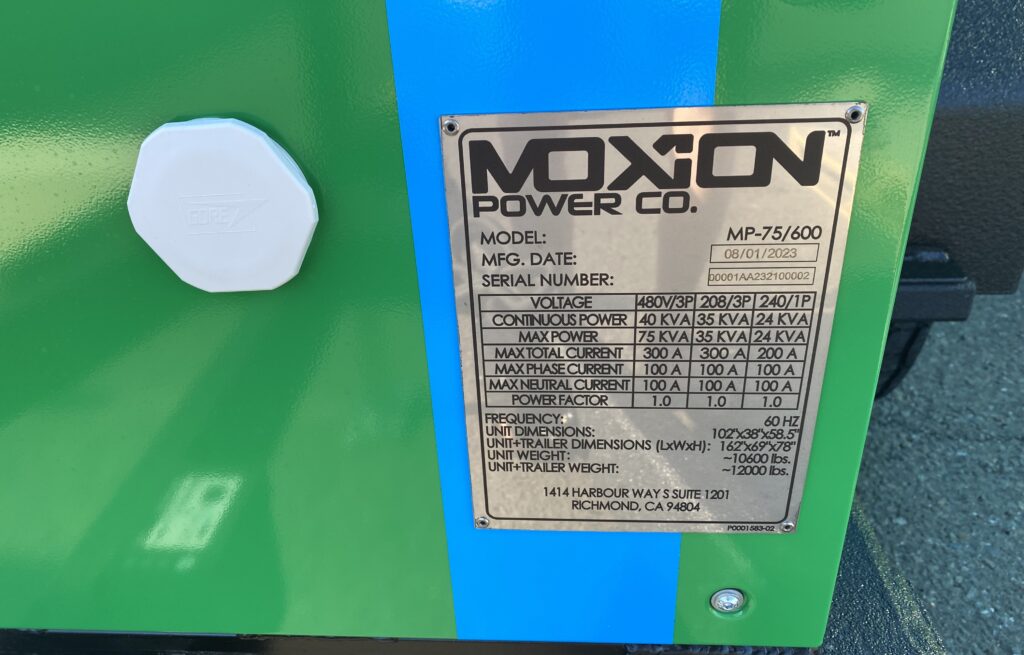
This is a huge, towable, 600 kWh battery – eight or nine times the capacity of a typical electric car battery. And it supports decently fast charging: ten hours DC charging and 24 hour AC charging (apparently ultra fast charging isn’t as important for generators as for EVs).
But how much does it cost? One clue is this page, which mentions a $250,000 voucher number – that’s how much The State of California is willing to reimburse a business that buys one of these puppies as part of its ‘Clean Off-Road Equipment Voucher Incentive Project.’
Continual cost/performance improvements will be key to accelerating battery generator adoption and putting diesel generators in the U.S. out of their misery. Some more tech breakthroughs would be good, too. Forty kilowatt portable diesel generators seem to sell for $50,000 or less these days – still an order of magnitude cheaper up front (not counting the ongoing fuel cost).
Addendum: I was on a flight this week with a Moxion exec; we got to talking and I learned a few more things:
- Apparently one of the best drivers for battery generator adoption is the fact that most generators run very inefficiently and wastefully most of the time… that is, they’re turned on and burning fuel but not actually supporting much of a load. The (maybe exaggerated) example he gave was waiting for someone to go to the bathroom so the light in the bathroom can turn on, but you get the idea. Battery generators are a great solution because they can trickle or gush out as much or little power as needed, highly efficiently… dramatically reducing the number of diesel generators needed on a site, and the amount of time they’re running and burning fuel.
- In scenarios where a site isn’t grid connected and has a mix of diesel and battery generators, the diesel generators can recharge the battery ones, running at 100% efficiency, and then turn off, letting the battery generators more efficiently handle the variable load. This is the low-emissions solution if you’re not able to recharge the batteries with local solar or clean grid energy.
- Moxion’s planning to launch a rental service, which will compete with Sunbelt and others. This makes sense to me if the key to accelerating demand for battery generators is to provide the whole solution (standby/backup power as a service), rather than selling individual pieces of hardware. The margins at scale might also be better, I’m guessing… and by being closer to the end customer they’ll capture more learning which can be integrated back into their hardware and service offering.