
“You keep using that word.” – Inigo Montoya, The Princess Bride
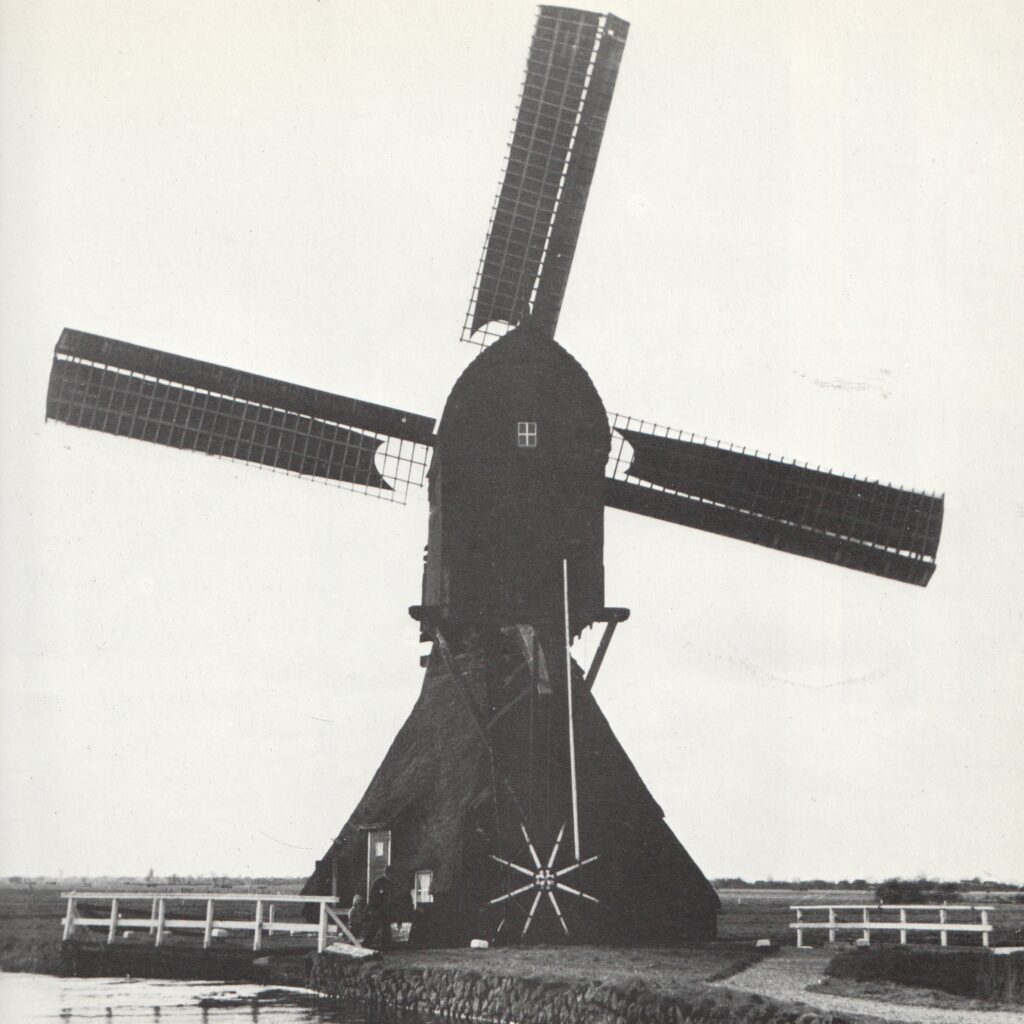
The wind is blowing… in China and around the world.
China is building ‘windmills’: lots of them.
Actually, they’re building wind turbines, not windmills (windmills mill grain). But The Wall Street Journal called them windmills anyway this week in their piece about the stunning growth of China’s grid.
Wind turbine haters have been saying ‘windmills’ since 2012, when the famous owner of a golf course in Scotland did so to oppose a nearby wind farm. And the term has stuck, even among some journalists.
But never mind: China’s building wind turbines like there’s no tomorrow; more than the rest of the world combined. Specifically, they added 80 gigawatts of wind (and 277GW of solar) in 2024, compared to just four for the U.S (and forty of solar):

Why is China building so much wind, and other clean energy infrastructure (solar, storage, transmission, nuclear) so quickly? So they can stop importing fossil fuels, and blow past the U.S. in powering everything the future will depend on: like AI, computing capacity, industrial capacity, and military capacity.

Wind power is amazing.
Modern wind turbines are incredible machines: up to three football fields tall, and capable of generating up to 26 megawatts of power each. They’ve been getting bigger and bigger over time, because they generate far more power the bigger the blades are, and the higher up they are. Here’s a chart from an excellent U.K. case study showing how today’s offshore wind turbines compare to the very first ones 25 years ago.

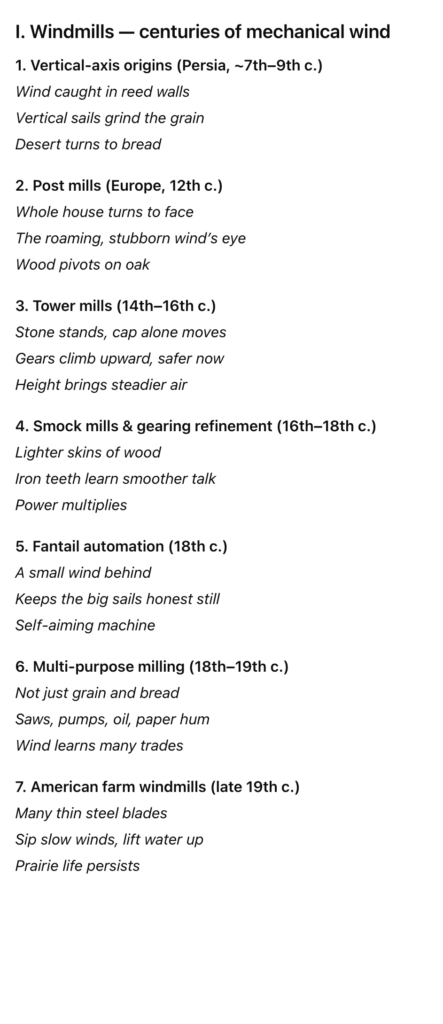
The evolution of wind power, in fifteen haikus.
How did wind power get this awesome? I asked Gemini and ChatGPT to do a short history of windmill and wind turbine advances in Haiku format. Both were great, but the ChatGPT layout was better:

What’s the deal with wind in the U.S.?
If wind power is surging in China and the U.K., and making steady progress in many other countries, what’s holding it back in the U.S.?
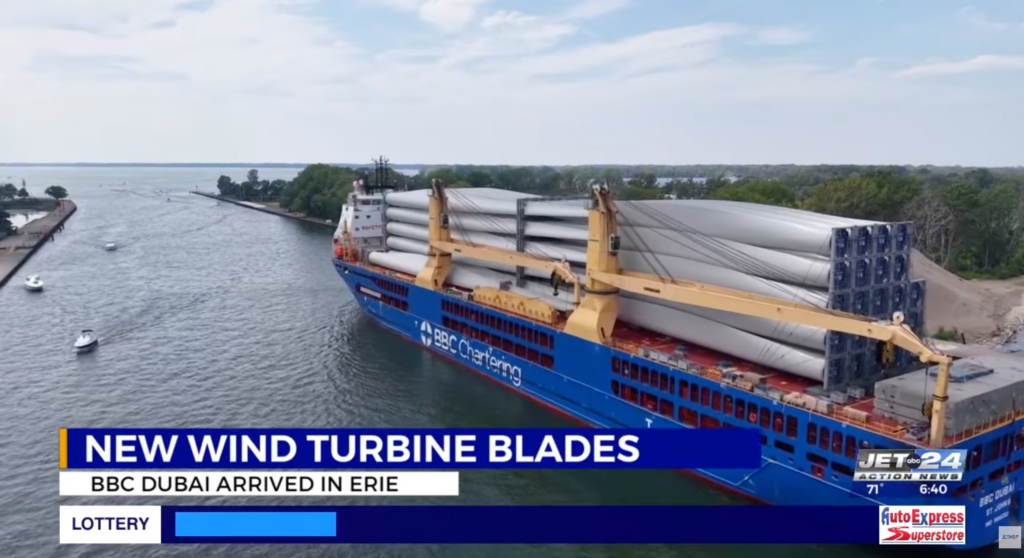
Basically, wind power can provide lots of really cheap electricity, but only if you go big. It’s a top-down thing, not a bottoms-up thing. Big wind farms. Big turbines. Big support infrastructure. Big commitment and follow through on a national scale.
That’s not happening right now in the U.S. Wind’s been the biggest casualty of the fossil-funded war on clean energy. Projects have been scrapped, permits been pulled, government support withdrawn. And the market is pulling back, or even giving up. It’s an interesting contrast to solar and storage, where the market’s still aggressively driving forward (see my RE+ conference report for details). Because there’s no cheaper (and crucially, quicker) way than solar and storage to power all the AI data centers and other things we want to power.
Here’s what’s holding wind back in the U.S., for now:
Huge wind turbines are an easy target. These machines are gigantic and other-worldy; easy to spread rumors about and equate with globalist conspiracies or whatever (see this excellent Canary Media piece on a leading anti-wind evangelist). No one has an uncle who’s installed a massive wind turbine at their house. You can’t buy them down the street and put them up yourself.
Wind requires lots of transmission. Building transmission is almost impossible in the U.S., and most wind farms need it to get to the grid. By contrast, you can build solar and storage almost anywhere, and plug it into the low-voltage (‘distribution’) grid locally. Or even better, you can install it ‘behind the meter’ (on the roof of or right next to your home, warehouse, or data center).
Every wind project is unique. Wind projects are often one of a kind, with lots of specific location and supply-chain related challenges. Solar and storage in contrast are much more commoditized, and can increasingly be plugged or dropped in anywhere with standardized cookie-cutter templates.
Wind requires decade-long financing commitments. Wind farms are often billion-dollar undertakings with huge capital expenditures, so require much more (and more complicated) financing, over longer periods of time. So they’re much more sensitive than solar and storage to anything that creates uncertainty, such as interest rate fluctuations or the loss of political support.
Wind requires a lot of very specific operational capacity. Wind projects are much less ‘shovel ready’ in the U.S. than solar or storage. And this is a catch-22: wind requires more specialized transport and facilities (e.g. ports and ships), workforces, and operational expertise than we have, because we’re not doing wind projects at scale.
Wind requires very specific, difficult real estate. Offshore wind has so much potential to power large coastal cities efficiently. Yet it also requires the most difficult real estate to acquire rights to and permits for: the ocean. There are many more stakeholders who need to buy in or be paid off, than for comparable capacity solar and storage projects.
Wind requires more foreign company involvement. The world’s leading wind turbine manufacturers are Chinese and European, and the most experienced wind developers are too. This doesn’t help politically on any level: fed, state or local. With solar, the equipment may be Chinese, but it’s dirt cheap. And the developers are mostly domestic.
Wind requires national-scale commitment. Between siting, permitting, financing, labor agreements, interconnections (with the grid) and everything else, large scale wind only works if all the stars and stakeholders align. It’s very similar to large hydropower or nuclear projects in that way. Solar and storage projects simply don’t need this kind of national scale buy-in; the market can move forward on it’s own.
So wind is just a harder sell in the U.S. This doesn’t mean it can’t happen; we’ve built big ambitious things before. But it can’t happen bottoms-up, like solar and storage.
I got this weird vibe last year, attending the Pacific Offshore Wind Summit in Sacramento, even before the current federal bloodbath. It just seemed like the numbers didn’t add up, and that there was too much wishful thinking, and not enough thinking big.
I’m excited about solar and storage, because it can go fast in the U.S. right now. And I do hope we get better at building larger scale projects like wind here too.
In the meantime, hats off to all the engineers, developers and everyone else working on wind power around the world. We need that wind power, and we salute you!
